** Please note that I am not a scientist, I have no medical background, and – except where supported by a link to further information – this post was written based on very little, if any, research. This is a lot of personal opinion based on my life perspective and experience. I encourage everyone to think critically about these and any other suggestions they find in the world right now: only you (and medical professionals) can decide what is best for you. Feel free to challenge any of this in the comments.
Our entire reality is based in balance: light and dark, right and wrong, fortune and bad luck. Winter decay thaws into spring’s rebirth. When one political party pushes, the other side pushes back. The stocks fall, then they rise again. Everything that goes up, must come down. And on and on and on.
The coronavirus has thrown our environment totally out of whack. So we are all trying to re-calibrate, recalculate, and regain our balance.
It can feel like quite the suspenseful balancing act though when everything is interconnected, both internally and externally. The information that our senses intake engages certain parts of our brain causing emotions like fear or excitement, which produces specific hormones, which uses particular organs or starts up certain processes in one of our various systems, which in turn can have physical affects like dilation of eyes, goosebumps, or even affecting the state of our immune system. Then, based on what’s happening within us, we take action or make decisions that affect those around us, causing them to take action or make decisions that affect those around them, and so on indefinitely.
The interconnection of everything touches us all and it impacts us in every way whether we are aware of it or not. So how do we balance… everything?
The answer, of course, is that we can’t. You do your best with the resources at hand to control that which is in your control: A.K.A., you.
During a global pandemic, we are all rushing to help ourselves, our friends, and strangers. We are suddenly acutely aware of how much we need others and how much others need us. The good news here is that, since everything is connected to everything, the more you help balance yourself, the more of a positive impact you will have on those around you.
Thus, the best thing we can do to regain global balance is to first take care of ourselves and then take care of others (which is actually a good life motto in general, too).
Since every life is different, the specific process for regaining balance in each life will be just as different. In general though, there are things we can all do to find more balance in our own lives and to support others in the same search.
Put On Your Own Oxygen Mask Before Assisting Others
First things first: take care of yourself. Our instinct in this scenario is not necessarily what’s best for us, but that’s okay because we know how to counteract our instincts.
When there is a threat, most people instinctively become stressed, panicked, afraid, or any combo thereof.
Fear engages our mind and body to help us survive: it narrows our perspective to help us focus on the immediate threat or danger. With this type of focus, we make short-term decisions based in survival (such as fight or flight). Parts of our body get triggered to send us into what’s essentially physical overdrive to enable whichever short-term decision is made (fight harder or run faster).
A short-term perspective, however, is not sustainable during a pandemic that will last months. Plus, the specific perspective of fight or flight is actually not helpful for this type of threat since a global threat that attacks your health is not something you can get away from or physically fight off (at least not with hand-to-hand combat). Plus, our bodies actually cannot sustain that physical overdrive for long periods of time. It is intended to be used over short periods of time in order to get us out of danger and when our bodies attempt to be in overdrive for too long, it weakens our immune system and makes us more vulnerable to threats against our health.
So, in the coronavirus environment, panicking is actually the least helpful thing anyone can do: it’s both not helpful and actively detrimental.
Since our bodies will be instinctively motivated to panic and stress, we can counteract that instinct by doing everything and anything we can to stay calm and regain balance. Here are some specific things we can do to that end. Check out the links embedded throughout for more information.
Exercise
Endorphins, seratonin, and other sciency words! It helps your physical health and your mood, which then both positively affect each other, too. Double whammy (or quadruple whammy? Math is hard.). You don’t need to train for a marathon. Just get that blood moving some way, some how. “WHO recommends 150 minutes of moderate-intensity or 75 minutes of vigorous-intensity physical activity per week, or a combination of both. “
Stretching is definitely a worth while, low-impact, and calming activity, unless this is your dad:
Here are some ideas for at-home workouts – remember Google and YouTube are your friends.
You can also get creative with house-hold goods being used as weights!
Get Fresh Air
I don’t know if this a real thing, but it always makes me feel better! It makes me feel more connected to the outside world to breathe the air everyone else is breathing (from a safe six foot distance) and it makes me feel less trapped in one place to get some air movement. Vitamin D via sun on your skin is a huge plus!
Open a window or go for a walk (with face mask if need be). Have a picnic in your yard or on your fire escape or at your open window (but be careful not to drop anything outside!).
Give Yourself Routine (if you don’t already have one)
Routine decreases stress by decreasing the number of decisions you have to make. Plus, a routine provides you with a purpose and a direction that can help you stay focused on moving forward, instead of dwelling on all the uncertainties of the world right now.
My schedule includes waking up at 6am so that I can exercise, shower, eat breakfast, and meditate before 9am. I then write and work all day, taking breaks for lunch at 1pm with my parents and a short walk with my mom in the afternoon. Depending on the day, I stop working sometime between 6 and 7pm to go help make and eat dinner.
Alternatively, here’s another example:
Eat Regularly and Eat Well
Depriving your body of food sends it into starvation mode, which puts stress on all your systems. Decrease that stress by eating at regular intervals. For some people, that could mean eating every 2 hours. For others, it could mean every 4 to 5 hours.
Remember that what you consume affects everything. The Harvard School of Public Health suggests that every meal should be half produce (mostly vegetables, but fruit, too), a quarter whole grains, and a quarter healthy protein.

Indulge In Moderation
Yes, you want to stay healthy, but sometimes health and comfort aren’t the same thing and comfort is just as needed right now. If your plate isn’t so much half produce as it is half pro-dessert, cut yourself some slack. This is NOT the time to start a new diet, restrict your body more than usual, take away sources of comfort, or get down on yourself for not being healthy enough. Aim for half produce and just accept wherever you end up landing.
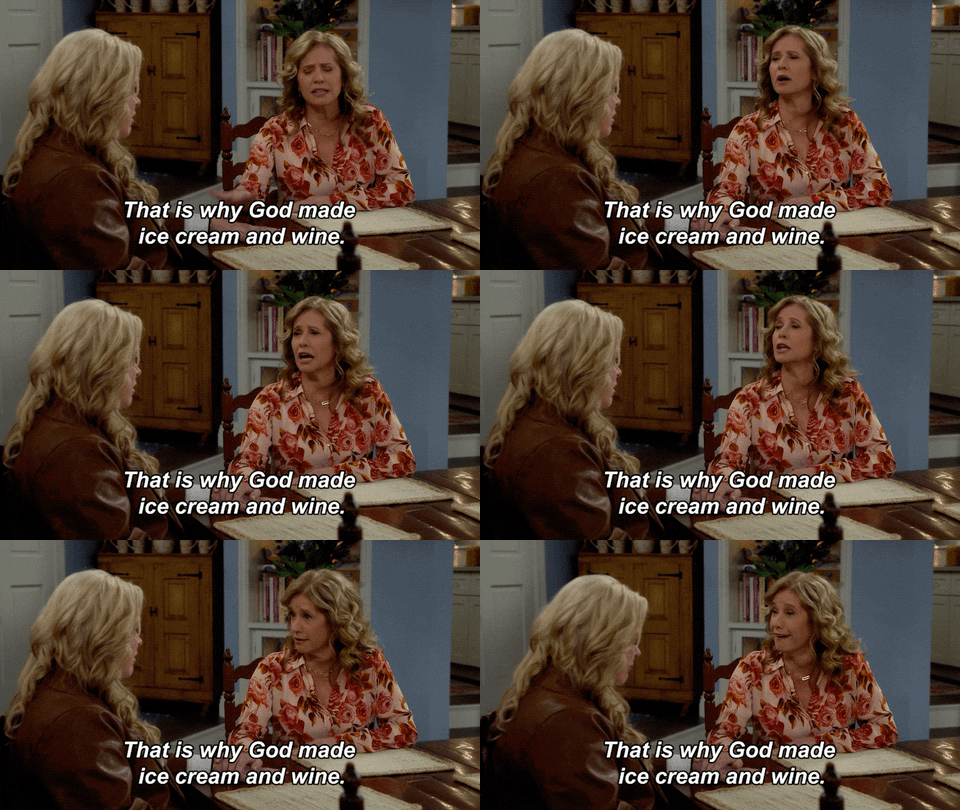
Have Fun
Play games. Break out in song. Relax. Be silly. Tell jokes. Create something. Surviving means nothing if we don’t take the time to enjoy life. Here are some more ways to do just that.
Every weekday, the New York Times is updating this list with things you can read, watch, listen to, play, and cook while under quarantine.
Did you have to miss a concert due to the pandemic? I did. To lift our spirits, musicians from all genres (ie. Garth Brooks, Diplo, and Andrew Lloyd Webber) are livestreaming their craft. Also keep an eye on your local music venues and organizations. For example, the Seattle Symphony is “continuing to share performances that provide strength, comfort and joy” by streaming them for free.
Had to cancel a trip? You can still tour museums, zoos, aquariums, and theme parks – albeit virtually – here.
In the PNW, we are definitely hurting thinking of all the spring hikes we’re missing. It’s not the same, but maybe take a virtual tour of a national park while you’re on a walk in your neighborhood. Just look up from your phone enough to see where you’re going and keep your 6 feet of distance from others.
Last, but not least, check out spring sales to upgrade your closet that has been reorganized for the 500th time this week.
Feel Things
It’s okay to laugh, cry, scream, or otherwise release emotions in a way that is not harmful to you or others. It’s okay if you don’t understand why you feel a certain way or if you don’t feel like yourself. This is affecting everyone in new and unknown ways.
Oh, and it’s okay if your face doesn’t match the way you feel. Just, maybe stay away from her:
Meditate
Meditation has had such an unexpectedly positive impact in my life that it’s hard for me to conceptualize others resisting it, but I try to remember that I used to be uninterested by it, too. Again, comfort is key right now, so if meditation makes you uncomfortable, don’t force yourself to try it out. Explore outside your comfort zone post-pandemic.
If you are considering meditation or have enjoyed it in the past, this is definitely a good time to dip into it.
Here is an article for beginners and this is a guided meditation that is beginner-friendly.
Apps are also surprisingly helpful for meditation. I like Headspace, but it isn’t free for the most part, so I found an article that offers several meditation app options, including free ones.
Take Vitamins and Supplements
I mean, why not, right? At this point, I think we are all pretty on board with anything that might help.
Top vitamins and supplements for immune support include Vitamins A through E, elderberry, and zinc. For more thoughts on immune support amidst the coronavirus, check out this Healthline article.
Challenge Your Mindset
If fear can weaken your immune system over time, what would hope do? As we’ve discussed, everything is connected to everything. If you train your brain to think more positively, everything else becomes a lot more positive.
It’s like breaking a bad habit, so it takes some perseverance and it won’t happen over night. Try things like every time you complain about something you can’t do because of the coronavirus, acknowledge and appreciate a good thing that has come about because of it.
For example, I’m bummed that I can’t go for a hike right now. Also, I am grateful that all the nature along those trails is getting a break from humans, which will allow it to rejuvenate. Additionally, I’m getting my nature fix via walks with my parents which allows me more time with them and my appreciation for my neighborhood has grown because of it.
Sleep Enough and Not Too Much
If ever there was a time to give your body enough time to repair, restore, and re-whatever the body needs to do while we sleep, this is it. It will help your immune system and your mood.
Sleeping too much can also occur when people feel depressed or anxious. I have personally found that sleeping a lot makes me want to keep sleeping. Vicious cycle and all.
So make sure you get those 8 hours (or however many is the right number for you), then make sure to get up out of bed and leave it until it’s time to sleep again. Only using your bed for nighttime sleep trains your mind to associate the bed with extended periods of sleep, helping it to fall asleep and stay asleep when you’re in the bed. Work, watch TV, and nap elsewhere.
One thing that can help you fall asleep faster, sleep better, and wake up more easily is – back up the list – having a routine around sleep. Do the same things in the same order at the same time every night and your body will start to take them as a signal that it’s time to start shutting down. Then do the same things in the same order at the same time every morning and your body will start to take these actions as an indication to wake up. Pavlov and whatnot.
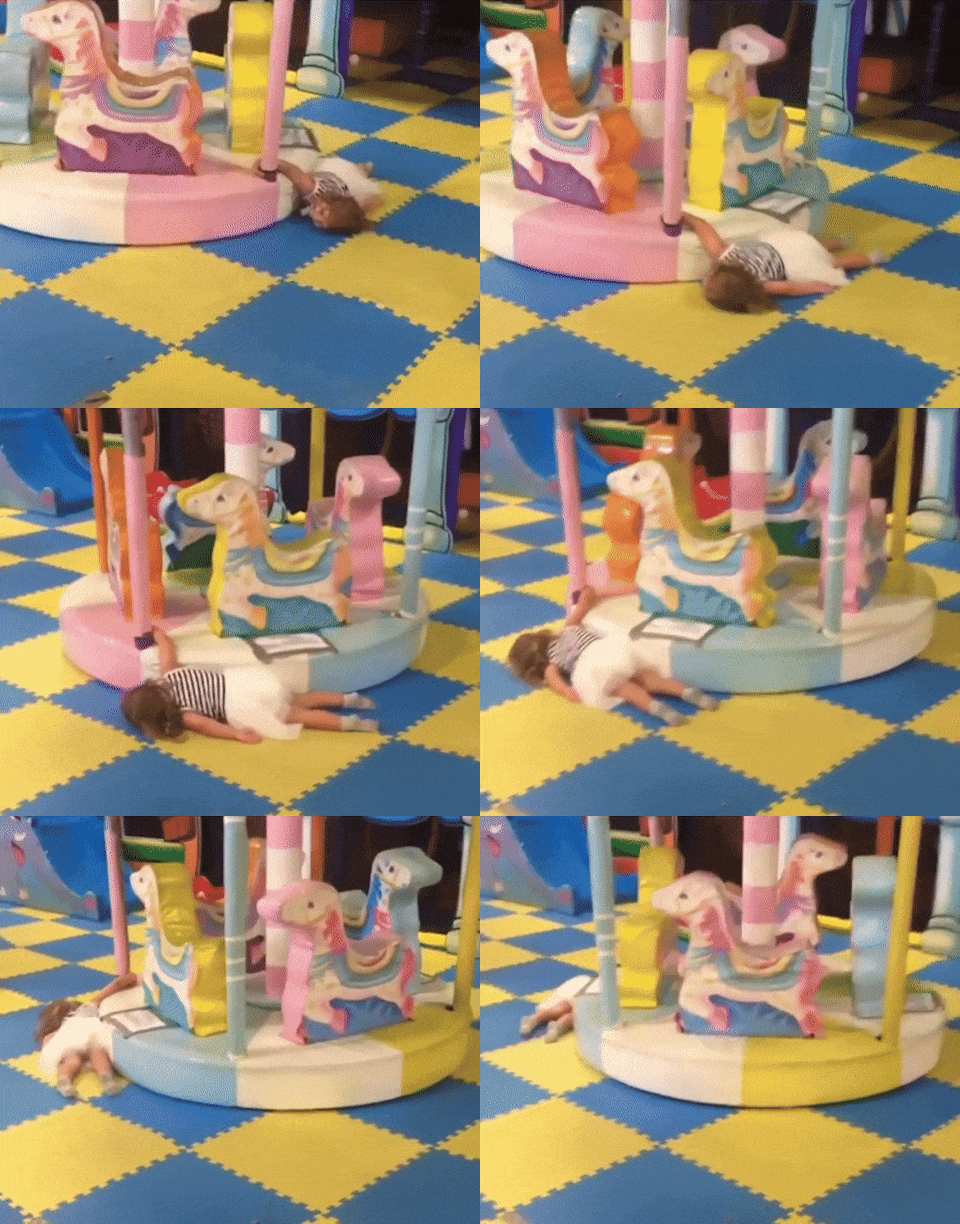
I do not recommend a carousel ride as part of the routine.
Set Yourself Up For Success
By which I mean, let’s just go ahead and lower the bar right now… for everything. We are all under unprecedented stress. Anything you can do to make yourself feel proud or accomplished will be helpful.
Set realistic goals. Avoid things you know make you feel discouraged. Do things you’re good at. Make a list of everything you did today just so that you can cross each item off one by one.
No matter what you did today, it was more than enough.
Get Inspired
We are so heavily influenced by what our senses take in.
No matter how much I’ve just eaten, I will feel hungry again if I smell my mom’s apple crisp. Studies show that an individual is more likely to tip after seeing someone else tip. And if we hear something enough, we even start to believe it, which is why we turn to things like mantras or words of encouragement. It’s also why orange is the new pink (#JosieAndThePussycats).
So fill your space with smells that make you calm or happy or comfortable. Watch feel good shows and motivational movies. Listen to music that inspires you. Taste food that’s yummy and touch materials that comfort you.
Cuddle
A pet, a housemate, a stuffed animal, a pillow, a blanket, anything! Even wrap your arms around yourself. I do not however recommend cuddling a cactus.
Screen Your News Intake
A lot of bad news is overwhelming. Consume it in moderation.
I don’t think we should ignore important information. Everyone absolutely needs to stay informed and take necessary precautions. Don’t shut out all of the bad news because some of it is necessary for the world’s safety.
It’s also important though to not overwhelm yourself. Try to determine what information is helpful to you and what information is detrimental for your well-being.
In addition, consider seeking out good news during a time when we feel bombarded by bad news. Here‘s a list of 10 sources of good news you can follow. My current favorite, SGN, is not on that list. This is the first episode of SGN, which aired March 29th, 2020.
Avoid Big Life Decisions
No one is at their best right now, so save the big life decisions for later if possible.
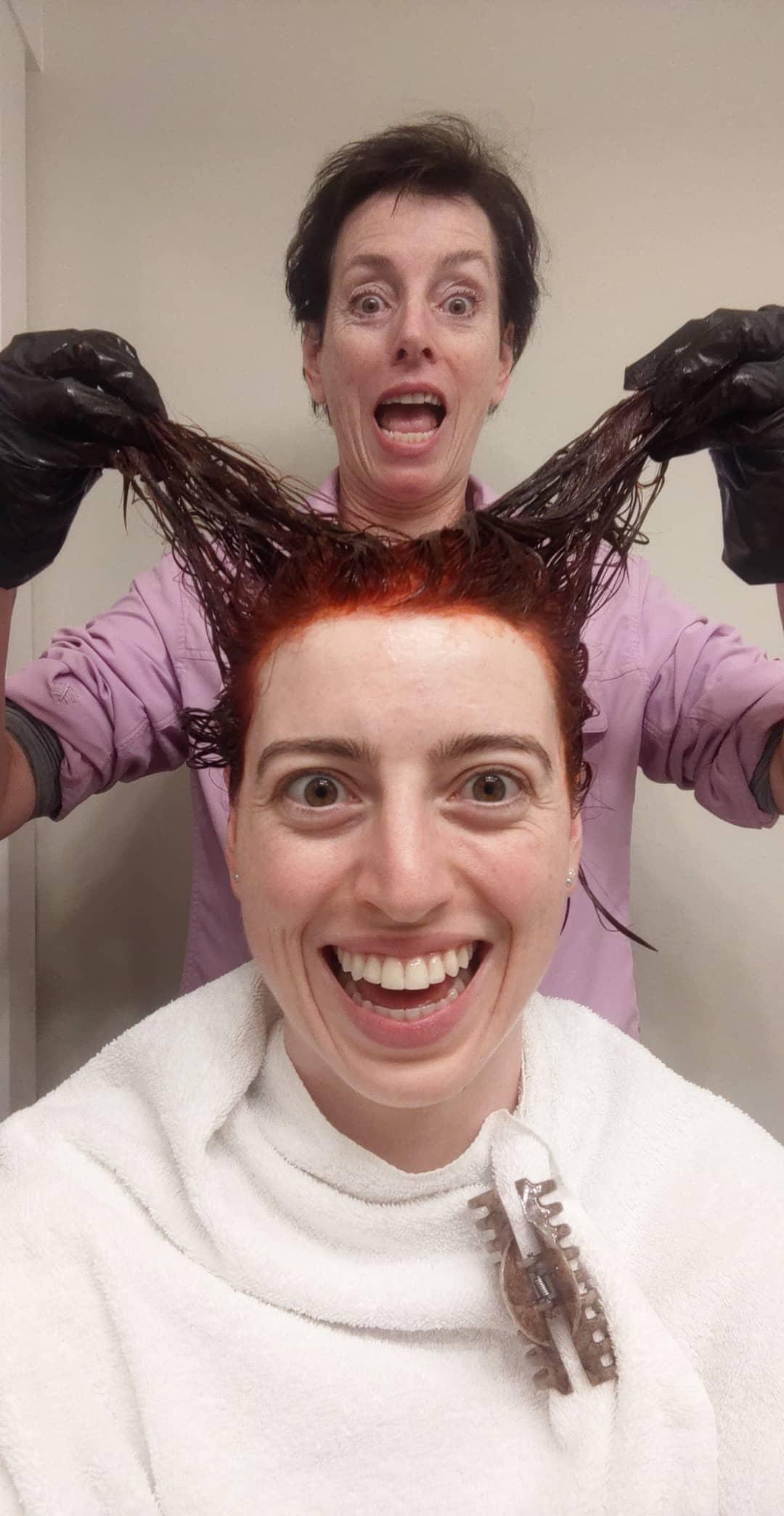
During a time when the scary changes in our life are infuriatingly out of our control, it can make some people feel better to be the cause of a change in their own life in order to feel in control. If you are one of us, my recommendation is to try something non-permanent. Like dying your hair. I personally went red. Two weeks ago. In case anyone was wondering.
#NotAControlFreak
#DenialIsBest
Give Yourself Purpose
This article will get way too long if we delve into the why of this right now (and also I don’t know the why), so let’s just jump to the punchline: people feel better if they feel they have a purpose and that they are fulfilling that purpose.
So in an upside down world, if your purpose no longer feels relevant or is temporarily lost, give yourself a new purpose.
Perhaps your purpose is caring for your family. Perhaps it is trying to lessen the economic blow of the pandemic on a national scale. Maybe it’s making a homemade mask for your mail person. Maybe it’s finding a cure for the coronavirus. Maybe it’s staying alive or sane or both.
It doesn’t matter what it is as long as you have one. Well, I suppose, it does matter that the purpose should not be to bring harm to yourself or others. If that was yours, try again.
If you want your purpose to be to help others, keep reading for some ideas on how to do just that.
It’s completely understandable based on the current state of the world that we would all be tempted to panic, which is why we will all need to work more intentionally than usual to keep our minds and bodies physically as well as emotionally nurtured, calm, and balanced.
Help Your Neighbor
Once you are effectively taking care of yourself, if you have nothing left in you to give, THAT IS OKAY. As previously mentioned, everything is connected to everyone, so the first thing you can do to help your neighbor is help yourself.
Seriously. The fewer people who get infected, the fewer people there are to potentially infect further people. So keeping yourself healthy is actually a win-win. You’re doing good for you and the rest of the world.
If, once you’re all taken care of, safe, and healthy, you do have something left in the tank, remember those who have it worse off than you. This can be done in several ways, including but not limited to the following.
Stay Home
In the same vein as you staying healthy keeps others safe, so does you staying home. For as much as we do know about the coronavirus, we still know so little. We do know though that people can spread it without having symptoms. So, in theory, anyone at your grocery store could have it and if they just wiped their nose before grabbing a gallon of milk and then remembered they don’t need more milk and put it back… you see where I’m going with this, right? We literally have no way to ensure we don’t have the virus or others don’t have it. Literally anyone could give it to you and you could in turn pass it to literally anyone else. Solution? Take the precautions you would take if everyone in the world had it, including you.
Stay home. Stay safe. Save lives.
Show Gratitude
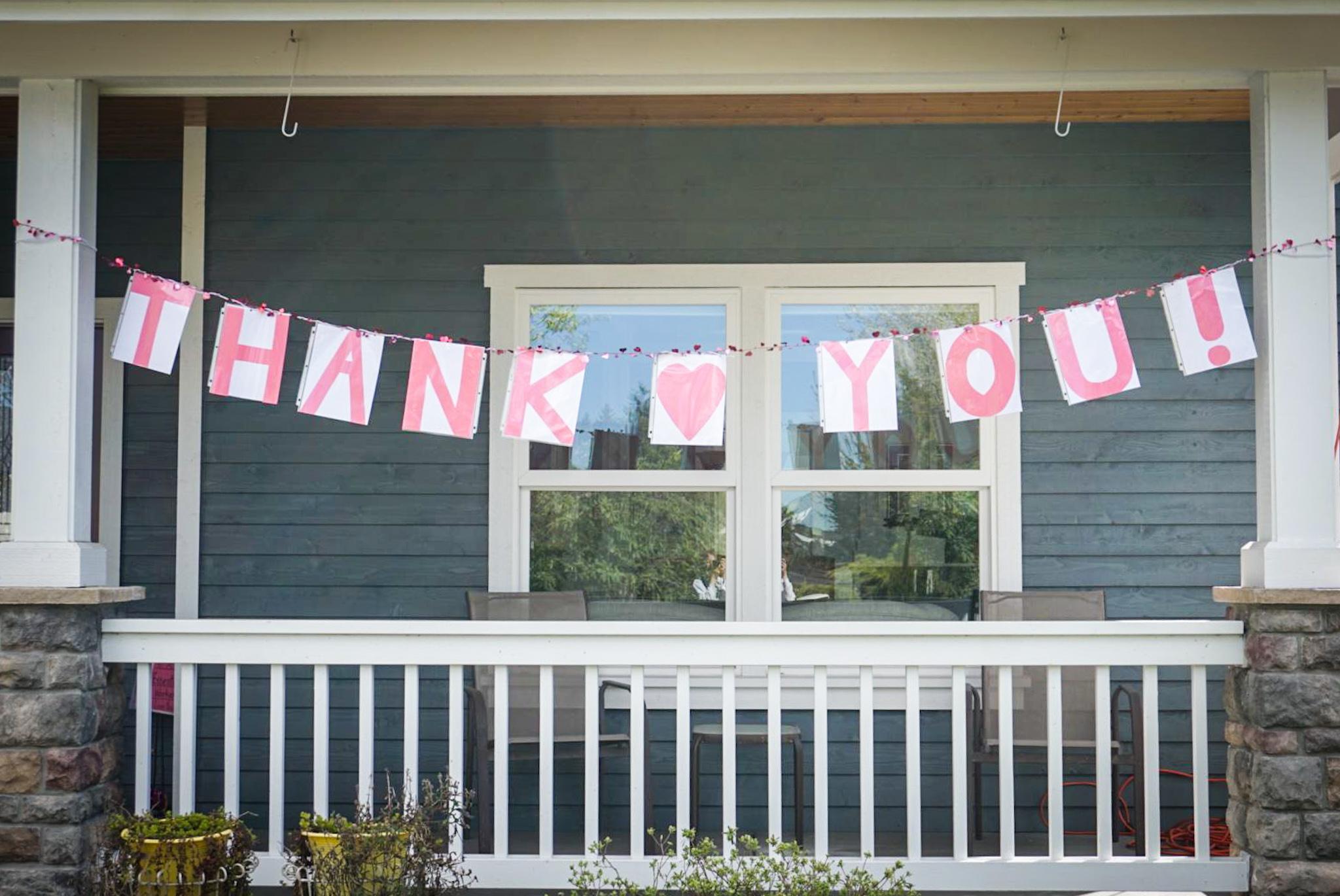
Let’s put on our creative caps! Post on social media, set up signs in your yard, tape paper hearts in your window, tie ribbons around poles. Essential workers are saving us right now – we are completely dependent on them, and that deserves some acknowledgement.
If you’re in an area that is participating in applauding healthcare workers at 8pm, join the masses: open up your window and put your hands together.
Check your local hospital website to see if they have any information on how to help or show gratitude. For example, UChicago Medicine has a specific page for sending thank you messages to healthcare workers.
If you know someone in the healthcare industry, drop them a text of gratitude or send them a note by snail mail. Both might be better than calling because they may be on crazy schedules right now, so who knows when they’re sleeping! But if you know they’re awake, I’m sure they’d appreciate hearing your voice, too.
Not only do these people deserve the displays of appreciation, but it will help them. It boosts morality which, as we’ve already discussed, affects everything else, too.
Donate Money
You do not have to be a celebrity or a multi-millionaire to donate. Anything you can give will make a difference.
Here are some things to keep in mind when making donation decisions:
- Greatest Need: the greatest need is in the medical industry as well as with organizations supporting our most vulnerable citizens.
- Other Charities: remember that all funds are being redirected towards the greatest need, so all other charities are also feeling the strain as funds are moving away from them.
- Worldwide Help: everyone needs help, so consider donating locally, nationally, and internationally.
- Length of Impact: the impacts of this pandemic will be seen for months and in some ways years. Consider setting up monthly donations. Five dollars a month will make a difference. That being said, some organizations are in such desperate need for money that there’s a real possibility they won’t even be around for recurring donations in the future. Lump sums now may be better in that case.
Overwhelmed by the options?
Fidelity Charitable created a guide for giving in response to Covid-19 as did Charity Navigator, an organization that works to “create an unbiased source of information that would provide charitable givers (…) the tools necessary to make informed giving decisions.”
Still overwhelmed? Here are 4 great organizations to donate to.
- “Feeding America is the nation’s largest domestic hunger-relief organization.” They’re on everyone’s lists of places to donate to right now. Donate to the COVID-19 Response Fund and/or set up a monthly donation.
- Johns Hopkins Medicine is a great place to donate to for COVID-19 patient care and research. Donate either a one time or recurring gift.
- Direct Relief is working to provide essential medical items (such as masks) to healthcare organizations. Donate here.
- Then of course you can always donate to the World Health Organization. The donation can be one time, recurring, or made in honor or in memory of someone.
Smile
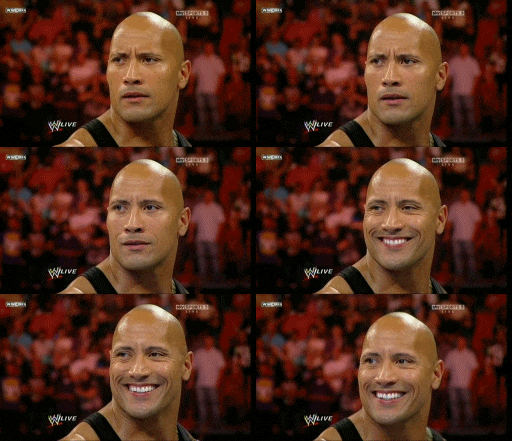
Everyone is so damn scared. Okay, not everyone, but most people. If you are not scared, please kind in mind that a lot of people are. One easy, free, immediate way to help someone feel less afraid while still keeping 6 feet apart is to smile at them. On your walks, at the grocery store, on Zoom – smile. It will help.
Have a mask on and realize no one can see your beautiful smile? Wave hello.
Hands full? Nod your head. Say goodmorning or good evening or heya.
It may seem unnecessary, but acknowledging the existence of humans around you will help them, and maybe you, feel more connected, more hopeful, and more united.
Provide Time and/or Resources
Donate supplies if you have them. Make supplies if you can. I’m hearing of people sewing masks for local businesses. Identify your skills (sewing, typing, engineering, soothing), resources (time, money, supplies), and get creative.
Donate blood (if you feel safe doing so). Appointments are now required for blood donations in order to allow for social distancing.
Don’t hoard. There are now global shortages of medical supplies. Sure, you want to make sure you have enough for you and yours, but don’t get supplies that will just collect dust in a corner of your house while others need them now.
Donate time. Offer to help with childcare or pet care for those you know in the healthcare industry. Even for people who can work from home, offer childcare. Just because they’re home, doesn’t mean they’re available to their children who are no longer in school.
Support local businesses by buying gift cards or ordering take out/delivery.
Donate food. To food banks, to your elderly neighbor who is quarantined by herself, to your immuno-compromised sister, to your friend who is now working 85 hour weeks in labor and employment law and doesn’t have time to grocery shop or cook, to your friend who lost his job and is worried about money, to your neighbor who is totally fine but would appreciate you thinking of him, or even to a stranger.
Share on Social Media
I freaking hate social media. It drives me crazy, it motivates all sorts of behaviors and lines of thinking that I disagree with, and it gets totally under my skin in instances like this where it is so wonderfully helpful. But let’s not let my dislike of this particular communication medium get in the way of its benefits.
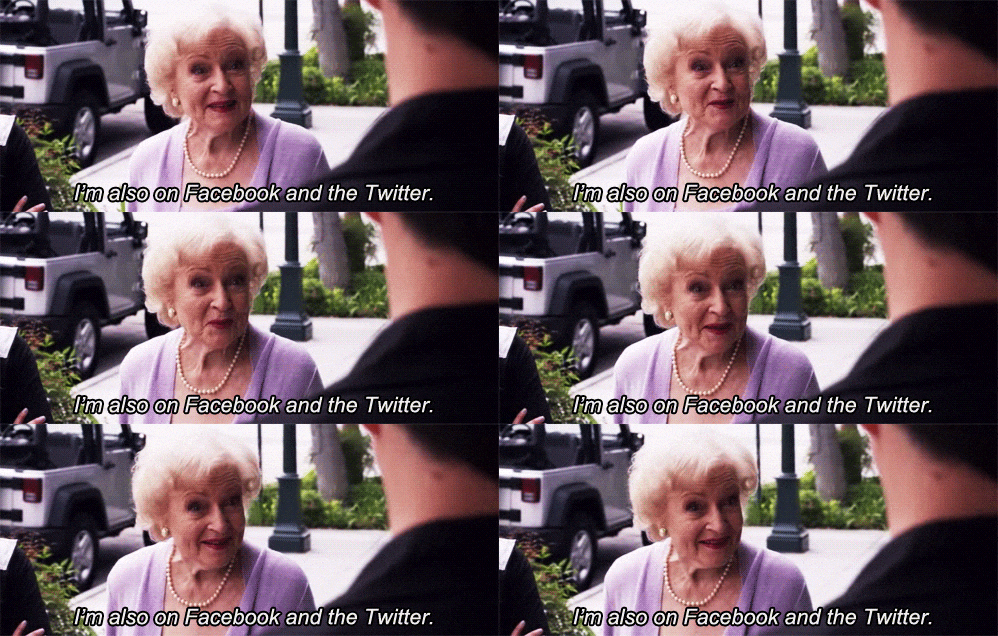
Share what you’re doing to stay healthy and help others online. Share good news. Share your routine and your feelings and your inspiration. Share your gratitude and advertise how you can be of service. Talk to your friends and your family. Use social media to offer help, get inspired, inspire others, and connect with the rest of humanity when we are all sequestered to our homes.
Check on Family/Friends/Neighbors
A call, a text, a letter, an email, a comment online. Spend more time than usual checking in, asking how people are doing, lending an ear or a shoulder, and asking for help in return. Not just today, but also some time next week, and every week for the next while.
Glennon Doyle said something recently that really stuck with me: sometimes we don’t need a fixer, we just need a witness. Be a witness and request that others be your witness.
Think Outside the Box
Think of the things you are thankful for in this situation and then imagine someone who doesn’t have one of those things. What are their options? Is there something you can do to help them?
For example, my mother is immuno-compromised. It’s not too much of a problem for her because she can stay quarantined at home while Dad and I grocery shop. But what if an immuno-compromised person were living alone? What if the person who might usually help them in this situation were sick and couldn’t interact with them. How would they get groceries?
Enter the Vulnerable Patrons Hour at grocery stores (I don’t think anyone officially calls it that, I just came up with the phrase myself). Some stores are offering the first hour or two, right after everything has been sanitized, to only the elderly, pregnant, and otherwise high-risk groups, so that they can safely buy groceries.
That was started right here in the Seattle area by some local shops, but it was spread to the national chains on request by a patron of the local shop who wanted that option elsewhere, too.
The Google Machine
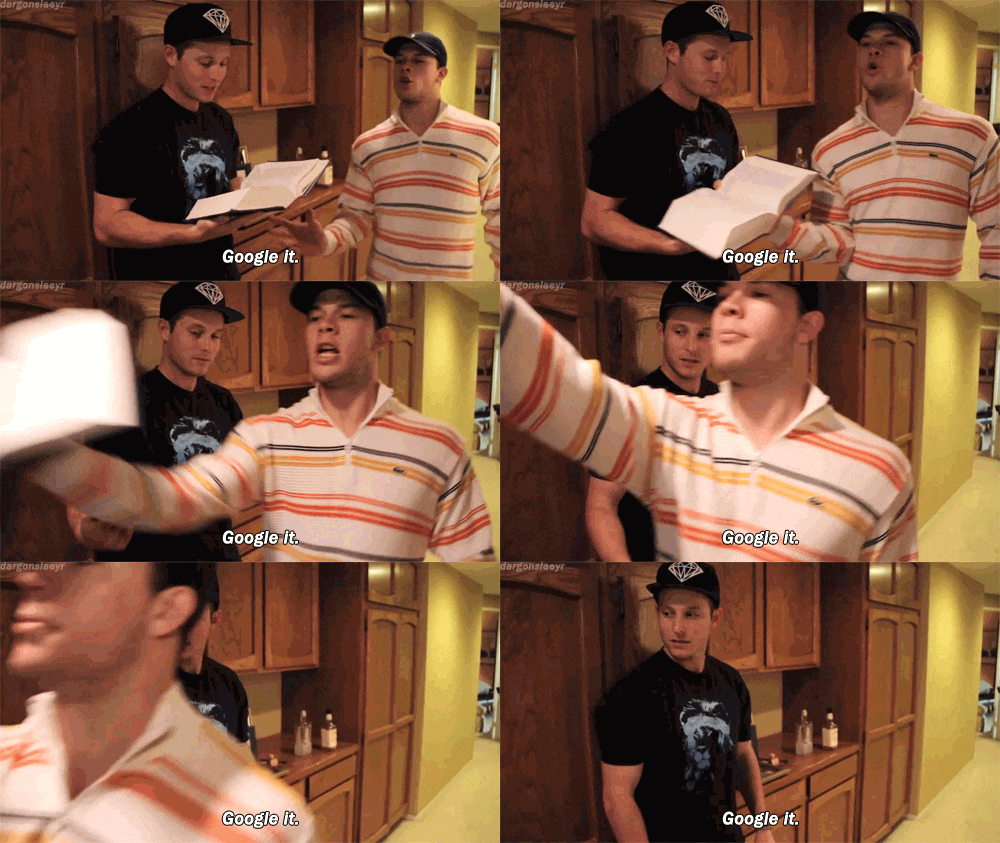
You can literally Google how to help out with this pandemic. If you want more options, the internet is a vastly helpful, albeit overwhelming, resource.
Helping others can be something you do directly, it can be a suggestion you make, it can be a smile and a wave hello to the other dog-walker across the street, or it can be a donation in some form. It can be a positive comment on Instagram or a hug for someone you are quarantining with. A video chat with someone or take-out to support your local restaurant. Everything is so intense right now. That means hurtful things are more devastating, but it also means that acts of kindness touch us more deeply.
However you decide to help, remember to stay 6 feet away from others, stay home as much as possible, and make yourself the first priority. Otherwise, take advantage of this opportunity to quite literally help the whole world.
We are all human. We are messy and make mistakes. We are imperfect and limited. But we are also more powerful than any of us know. We are all more capable than we realize. And we have one thing in common: life.
Life is the one thing we all value, the one thing that helps us identify with each other and empathize with each other. That’s why, when life is being threatened, I believe in humanity to rally and find a way. I believe in humans to consider more than themselves and I believe in people to look across the street and see their neighbor, not someone to fear; to look across the aisle and see their colleague, not their opponent; to look across an ocean and see their allies, not their enemies.
We are all in this together. No one can combat this threat on their own. The only way to get through this is if we are all on the same page. If every person does everything in their power to take care of themselves and then help take care of others, we will have the best shot at finding our footing once more and regaining our balance.
 Draft Wanderer
Great post 😁
LikeLike
Thanks so much! I hope it helps 🙂
LikeLike