I am lucky; I have never experienced war.
I have never fought in a war or had my life severely threatened by war. I have never lost a loved one to war.
This has a lot to do with timing: I’m young (ish). World War II ended 74 years ago. Even the Cold War ended before I was ever born.
It also has a lot to do with place.

The closest war-adjacent threat I’ve ever experienced was 9/11: an attack on U.S. soil, within my country’s borders. Even that took place on the East Coast – a six hour direct flight from my home in the Pacific Northwest.
When I was a junior in college, I studied abroad in Italy for a semester and in France the following semester. Most of my courses were in literature to fulfill my Linguistics/French/Italian degree.
At first, I didn’t understand why most of the assigned books – fiction and nonfiction alike (I first read Slaughterhouse-Five in Italian) – were about war. Then the professors started talking about the parallels between the real war and the fictional war, both of which took place on the real street or the real plaza or the real beach – the one right around the corner.
ln France and Italy, every other street or statue is named after a great leader during a terrible war. Every city has a memorial for the children and parents and friends that were lost.

I remembered this during the World Cup this year. Since matches were held in nine cities across France, I had an excuse to travel to cities I had never heard of and may have never visited otherwise. I would arrive in the morning by train and just start walking. If I saw something of interest in the distance, I would make my way in that direction. I’d explore, eat, go to the match, and then take the train back to Paris where I was staying with my friend.
Right now, I could maybe name 5 war-related memorials in the U.S. off the top of my head. In Europe, I cannot seem to explore a new city – regardless of its size – without running into one.

“Enfants de Reims tombes au champ d’honneur que ce monument edifie par votre ville meurtrie exprime a jamais son deuil et sa fierte.”
“Children of Reims fallen on the battle field, may this monument erected by your wounded city express forever its grief and its pride.”
During World War I, France counted over a million military deaths (1,397,800) and 300,000 civilian deaths for a total loss of 4.29% of their population. Italy totaled almost as many military deaths (651,000) as civilian deaths (589,000) for a loss of 3.48% of their population.
The U.S.A. came away with 116,708 military deaths and 757 civilian deaths for a total loss of 0.13% of our population.
During the First World War, technology changed the game. A large reason for the eye-opening death toll was that nations were using strategies developed against swords when both parties had guns. By the time the Second World War came around, strategy had caught up with technology.
This time though, it was the ideology that changed the game. Because of ideology and belief and patriotism and fear, France’s civilian death toll (267,000) was actually higher than its military death toll of 217,600. Though Italian civilians fared better with only 145,100 deaths, they lost even more soldiers than France lost civilians with 319,200 military deaths.
In comparison, the U.S. had the highest military death toll of these three specific countries (416,800) and the lowest civilian death toll of any nation during the war (1,700).
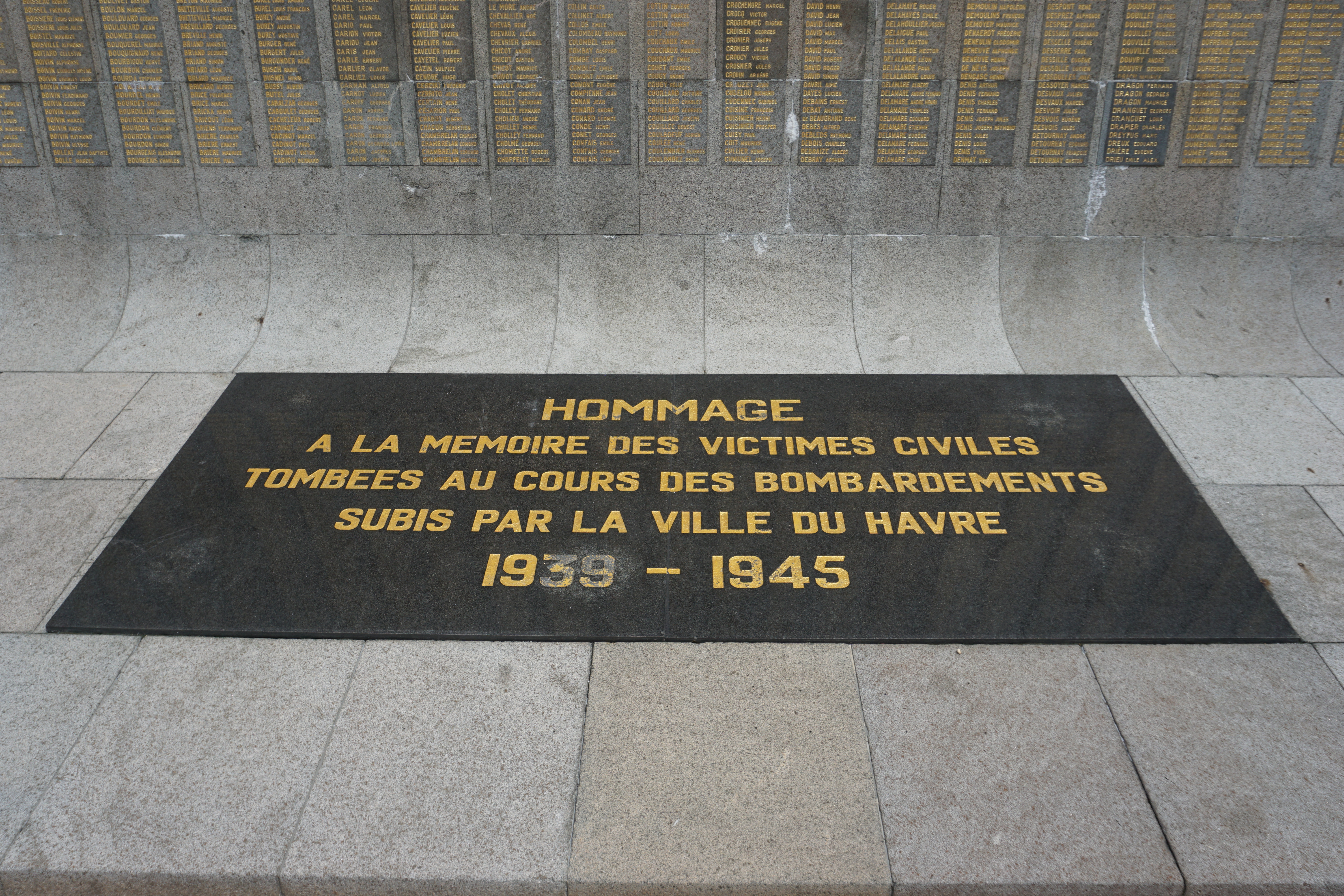
These numbers make me feel a lot of things.
Pride.
This is why Europeans loved Americans after the Second World War. We sacrificed twice as many soldiers as the French in order to stop their homeland as well as its people from being bombed and raided and occupied and taken and killed.
Shame.
The French are known and made fun of (at least in the U.S.) for surrendering. Maybe if the U.S. had lost as many civilians as the French, none of whom volunteered or were trained for war, we’d be more likely to surrender, too.
Compassion and understanding.
I don’t follow the news and my knowledge of world history is lacking. That being said, I remember after 9/11 (and these memories are vague and fuzzy as I was nine years old) that the U.S. wanted to send soldiers to the Middle East. Other countries were being asked to send soldiers, too. France hesitated and argued against the decision. Americans were upset that France didn’t hop on board sending their soldiers into a fight.
But maybe the fact that the inhumane nature of the previous war caused France to lose more women and children in their homes than men who were sent to protect them could explain France’s reticence to get involved in another war.

“For the children of Valenciennes who died for France.”
Though it makes me feel a lot of things, mostly I am blown away by the ways in which this must drastically shape our world views.
I was born in a country that, over the last 100 years or so, has experienced a war-related civilian death toll within our nation’s borders of 5,434 (total from 9/11 and both World Wars). France, during that same time period, has experienced a civilian death toll (just between both World Wars) of 567,000. That’s 100 times more civilian deaths.
On top of that, even military lives were lost within their nation’s borders: in the next town over, down the street, and in their homes – whereas ours happened across an ocean.
Those differences will significantly change the way families raise their children, in which contexts war is discussed, as well as how often war turns up in art and literature (hence my surprise at the increased prevalence of war in literature while studying abroad). It will affect every moment and every dollar that goes into building a society, a culture, and a people. For example, one could even theorize that this has affected how each country handles healthcare.
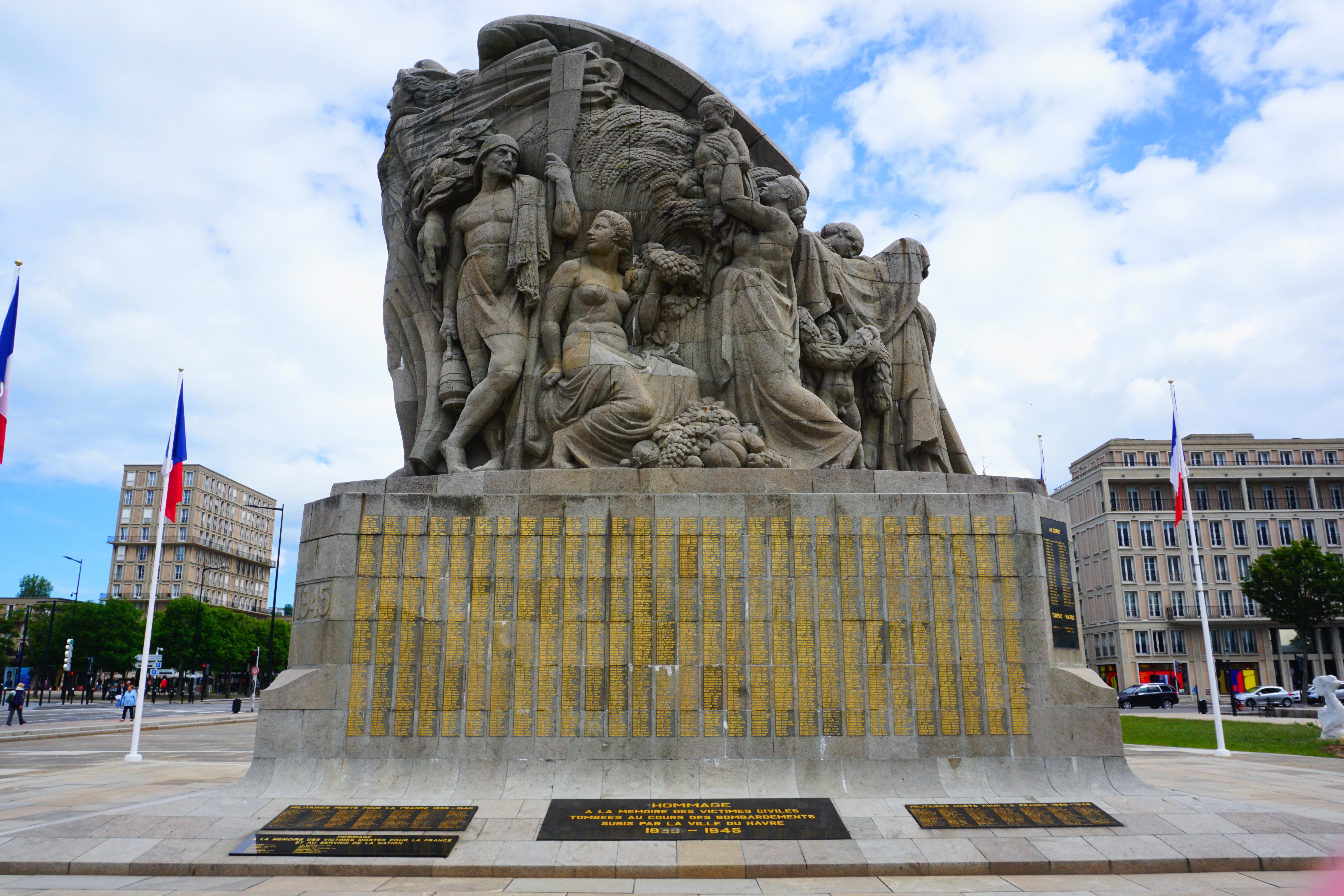
I would bet that Europe has been built over the last 100 years on more fear of war than the U.S.A. – and with good reason. Europe has had a much more intimate experience with the World Wars than has the U.S.
It’s evident in the names of streets and the number of memorials that stand across the country: two things I likely never would have known about had I not wandered through the cities myself.
This is why I travel: to shed light on my shortcomings, my knowledge gaps, and my narrow perspectives. I do not have the world view of a European, and as far as the worlds in which we were raised, I never will. But that’s okay because I have something better:
My perspective as well as the understanding that it is incomplete and that the only way to complete it is to consider the views of others.

Credit
Photo editing by Zac Tate.
References
Research Starters: Worldwide Deaths in World War II
https://www.nationalww2museum.org/students-teachers/student-resources/research-starters/research-starters-worldwide-deaths-world-war
Reperes: World War I Casualties
http://www.centre-robert-schuman.org/userfiles/files/REPERES%20%E2%80%93%20module%201-1-1%20-%20explanatory%20notes%20%E2%80%93%20World%20War%20I%20casualties%20%E2%80%93%20EN.pdf
Second World War History: World War 2 Statistics
https://www.secondworldwarhistory.com/world-war-2-statistics.php
September 11 Terror Attacks Fast Facts
https://edition.cnn.com/2013/07/27/us/september-11-anniversary-fast-facts/index.html
 Draft Wanderer
Jackie,
I’m so proud of you.
I love this essay and the research and thoughts. Do you remember the morning of 9/11 at FAS? Nina and I were just talking about that yesterday. (Was Nina your kinder teacher?)
Thanks for taking us along to these monuments.
LikeLike
Thanks, Karen!
It’s a topic that has really struck me.
I do remember, and I remember not understanding a lot of what was going on. I was only 9.
(Yes, I believe Nina was my kinder teacher.)
Thanks for taking the time to leave a comment!
LikeLike
Thank you for sharing so honesty, with stark data easily presented. This allowed me to explore my limited perspective and attitudes. Happy travels!!
LikeLike
I’m so happy to share! Thanks for the feedback; I really appreciate it. I love hearing that this made a difference for you.
LikeLike
Thank you for sharing that with me. I’m so happy to help others explore other view points. I appreciate the comment!
LikeLike